
Watt Cleveland Knob and Tube offers and manages older-home electrical work in Cleveland and nearby communities. Electrical work is performed by fully licensed and insured contractors.
When a smaller scope answers the actual problem
Partial replacement can be a practical choice when an assessment identifies a limited affected circuit or earlier work has already modernized much of the property. It can also form part of a planned sequence, provided each phase has a meaningful endpoint. The starting question is whether the proposed boundary answers your objective, not simply whether its initial price is lower.
Watt Cleveland Knob and Tube manages defined replacement work through fully licensed and insured contractors. Tell us whether the request comes from a renovation, condition finding, budget decision or insurer letter. A partial electrical project may be appropriate to the building while still leaving an insurer's demand for full replacement unresolved. Establish those separate requirements before choosing the phase.
Electrical boundaries do not follow room names
A bedroom, kitchen or attic is a convenient way to describe where wiring was found. It is not necessarily the boundary of the circuit. Conductors can serve fixtures in other rooms or connect to later work farther along the route. Replacing only the visible section may leave connections that need further assessment.
The contractor needs to establish what the affected wiring supplies and how the proposed new wiring relates to the retained system. This can include accessible transitions, devices and circuit arrangements relevant to the replacement. Where the route disappears behind finishes, the scope should identify the uncertainty and any additional access needed.
Ask for a description you can follow without knowing the building's wiring history. The proposal should identify the included circuits or devices, their replacement endpoint and the known retained wiring. A broad phrase such as upstairs updated is not enough to explain a partial result to a future owner.
Choose a phase that will not be undone unnecessarily
A phased project deserves a whole-building conversation even when only part of the work is being commissioned. If another room is likely to be rewired later, its route may affect the best approach now. Closing a convenient access point and reopening it for the next phase can add disruption. That possibility should be discussed rather than discovered after decorating.
Ask whether the proposed route can support the intended later sequence, which choices are reversible and which finishes would be affected twice. There may be sensible reasons to keep the first scope limited, but the tradeoffs need to be visible. A plan for eventual replacement does not mean that all later work or pricing has already been agreed.
For an insulation or renovation project, identify the next trade's actual boundary. The electrical phase needs to account for circuits extending beyond that boundary and any inspections required before concealment. A construction schedule cannot turn an unresolved circuit into an isolated one.
State what stays in use
Partial replacement should leave the owner with a useful account of the remaining installation. Identify known legacy circuits outside the phase and any limitations in assessing them. The completed-work description should avoid implying that the property is free of K&T because a particular room or floor received new wiring.
Retained wiring may require further attention based on its assessed condition. A partial scope is not a certification of every untouched circuit. Ask what the contractor is recommending now, what remains a future consideration and what is outside the visit. These distinctions help prevent a budget choice from being mistaken for a technical finding.
The same clarity applies to disconnected material. Porcelain supports or abandoned conductors may remain where the agreed scope and applicable requirements allow. Their physical presence does not establish active status. Document what was disconnected and what was removed so later work does not begin with another set of visual assumptions.
Partial Knob and Tube Replacement: the work in photos


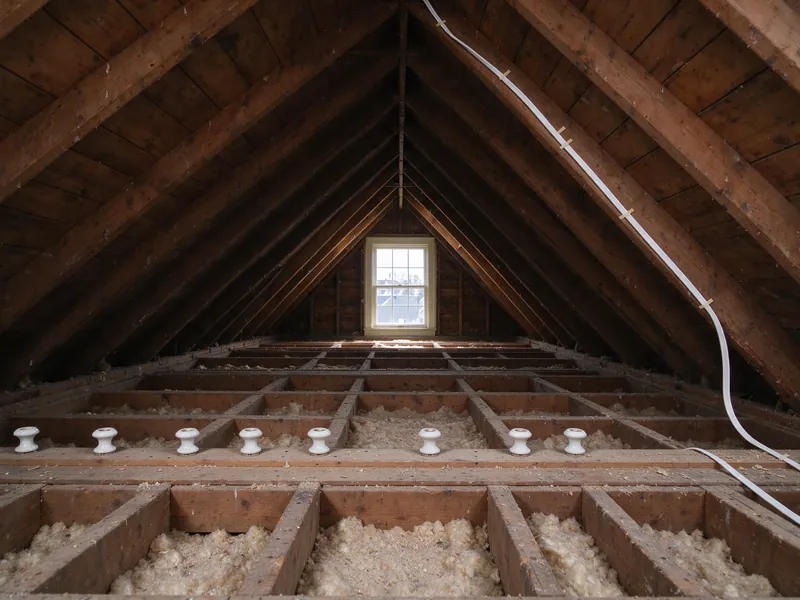
From access opening to finished wall
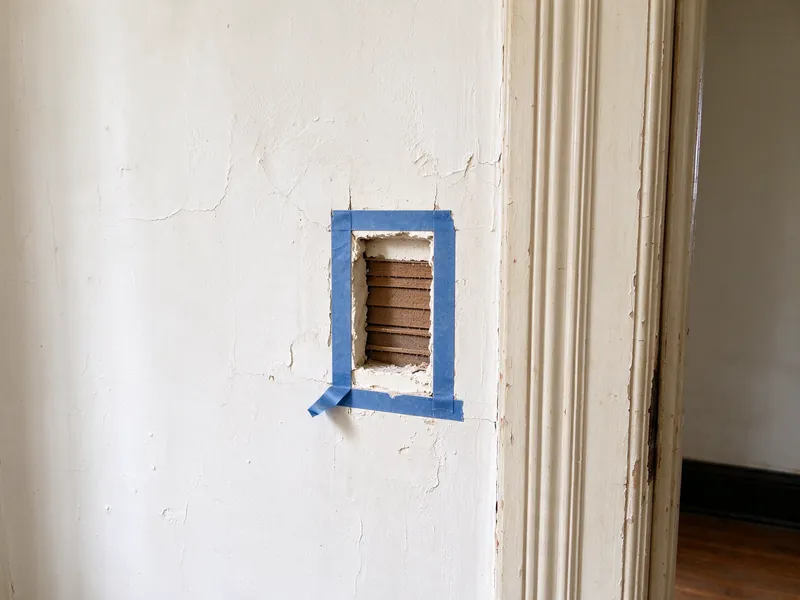
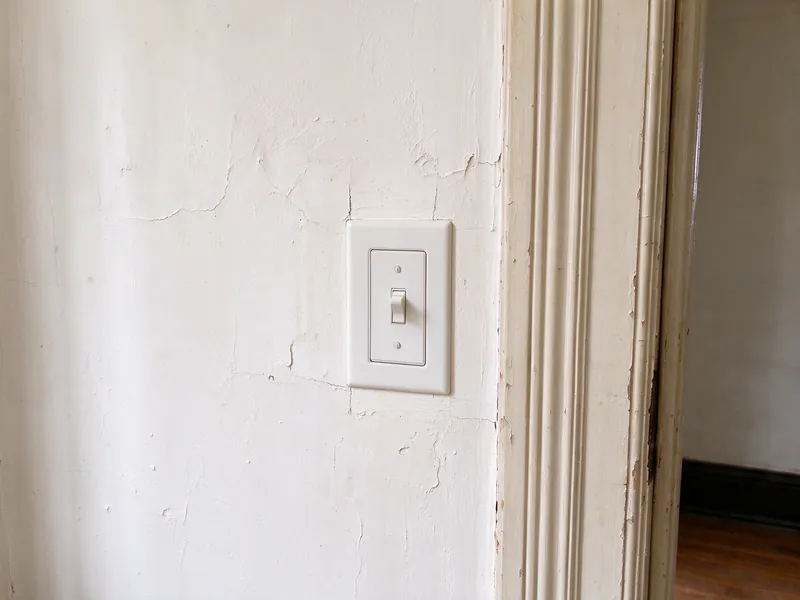
Access and restoration for a limited project
A partial job can still require access outside the room where the issue appeared. An accessible basement route, attic section or adjacent wall may be relevant to the circuit being replaced. Discuss those areas before the proposal is finalized, especially where another unit or finished space is involved.
Small electrical scopes do not automatically produce small decorating scopes. An opening in patterned wallpaper or decorative plaster can require a different finishing approach from an opening in plain drywall. Identify protection, access cuts, closure, finish matching and paint separately. The electrical contractor and restoration trade need an agreed handoff.
Residents also need to understand the interruptions associated with the phase. A circuit may serve more than its apparent room, so explain any essential equipment or occupancy needs. Do not assume that partial replacement means unaffected rooms will always retain power or that the work can be completed within a single visit.
Compare partial and broader proposals fairly
Compare proposals by the work they actually include. The number of rooms alone does not establish an equivalent scope. Look for included devices, routes, supporting equipment, permit administration, inspections and finish responsibilities. If one proposal retires an entire affected circuit while another addresses a visible segment, ask the contractor to explain that difference.
No universal partial-rewire price can be inferred from a whole-house example. Circuit extent, access and the condition of the retained installation matter more than a simple fraction of floor area. A phased project can have repeated setup or access requirements, but this page does not invent a standard surcharge or multiplier.
At completion, retain the phase description and relevant inspection records. If a later phase is planned, keep its proposed boundary separate from completed work. This makes the records useful when the next contractor, insurer or buyer needs to understand what has actually changed.
Questions about this work
Can only the attic wiring be replaced?
A defined attic scope may be possible, but the assessment needs to establish where those circuits continue. A visible attic segment can supply rooms below or connect with wiring beyond the accessible area.
Does partial replacement make the remaining wiring safe?
It does not establish the condition of every untouched circuit. Findings about retained wiring must be stated separately, with assessment limits and any recommendations preserved in the record.
Will I need to open the same walls in a later phase?
Possibly. Discuss the future route and access strategy before restoring the first phase. The contractor can explain where choices now may reduce or increase disruption when the remaining work is undertaken.
Can a partial job meet a carrier’s deadline?
Only the carrier can clarify whether the defined outcome satisfies its requirement. Share the letter before commissioning the phase; replacing selected circuits should not be presented as complete removal of active K&T.
What should the completion record say?
It should identify the replaced circuit scope, known remaining wiring and applicable approvals. Physical removal and electrical disconnection should be distinguished so later readers understand the actual endpoint of the phase.